Minimally invasive treatment of tumour-related obstructions in aortic body tumours
Heart base tumours – particularly aortic body tumours such as chemodectomas – can compress important vascular structures around the heart base and right atrium as they grow. This can progressively impair venous return to the heart.
For selected patients, we offer transatrial stent implantation at our highly specialised veterinary cardiology centre. This minimally invasive interventional procedure can be used to bypass a tumour-induced obstruction and improve blood flow.
What is a transatrial stent?
A transatrial stent is a specially selected vascular stent that is advanced to the heart through a blood vessel using a catheter. Under continuous fluoroscopic guidance and angiographic monitoring, the stent is positioned precisely at the site of tumour-related narrowing.
Once deployed, the stent expands and stabilises the narrowed vascular segment or the affected area of the right atrium. The aim is to maintain venous blood flow despite the tumour mass exerting pressure from outside or within the vessel or atrium.
The procedure is minimally invasive, meaning that conventional open-chest surgery is not required.
When may a stent be beneficial in a heart base tumour?
Aortic body tumours can grow relatively slowly over an extended period. Nevertheless, their location at the heart base means that even a local increase in size can have significant effects on adjacent vessels or the right atrium.
Clinically significant obstruction may be associated with the following symptoms, among others:
- Fluid accumulation in the abdominal cavity (ascites)
- Pleural effusion or fluid accumulation in the chest cavity
- Weakness and reduced exercise tolerance
- Difficulty breathing
- Swelling of the head and neck
- Signs of impaired venous return to the heart
Particularly in cases of slowly growing tumours, mechanically relieving such an obstruction can be especially important. The stent does not remove the tumour, but it can improve blood flow impaired by the tumour and thereby make an important contribution to quality of life in appropriately selected patients.
Minimally invasive interventional veterinary cardiology
Stent implantation is performed through vascular access. Using catheters, contrast medium and fluoroscopic imaging, we can visualise the narrowed area precisely and position the stent accurately.
The minimally invasive approach significantly reduces the physical burden on the patient compared with open surgery. Patients can therefore recover relatively quickly following the procedure. However, individual recovery time depends on the patient's general condition, the size and location of the tumour, and any concurrent diseases.
Highly specialised care for complex cardiac patients
Interventional treatment of heart base tumours is among the most technically demanding procedures in veterinary cardiology. It requires detailed cardiac diagnostics, advanced imaging, interventional expertise and careful planning to select the most appropriate stent for each individual patient.
As a highly specialised veterinary cardiology centre, we can offer this treatment to selected patients.
Before every intervention, we individually assess:
- Location and extent of the heart base tumour
- Type and severity of the obstruction
- Diameter and course of the affected vascular structures
- Cardiac function and circulatory status
- Possible concurrent diseases
- Potential benefits and risks of stent implantation
Based on these findings, we discuss with the animal's owners whether a transatrial stent represents an appropriate treatment option.
Our goal: maintaining quality of life despite a heart base tumour
For many patients with a heart base tumour, the primary focus is not on complete tumour removal, but rather on controlling its effects on the heart and circulatory system as effectively as possible.
When an aortic body tumour progressively impairs venous return to the heart, stent implantation may represent a valuable palliative treatment option. The aim is to reduce the obstruction, relieve strain on the circulatory system and preserve as much good quality of life as possible for the patient.
Images and videos
Our patient shortly after the minimally invasive procedure. The small vascular access site demonstrates the minimally invasive nature of interventional treatment. These patients regain mobility quickly following a successful intervention. Recovery varies depending on the individual patient's condition.
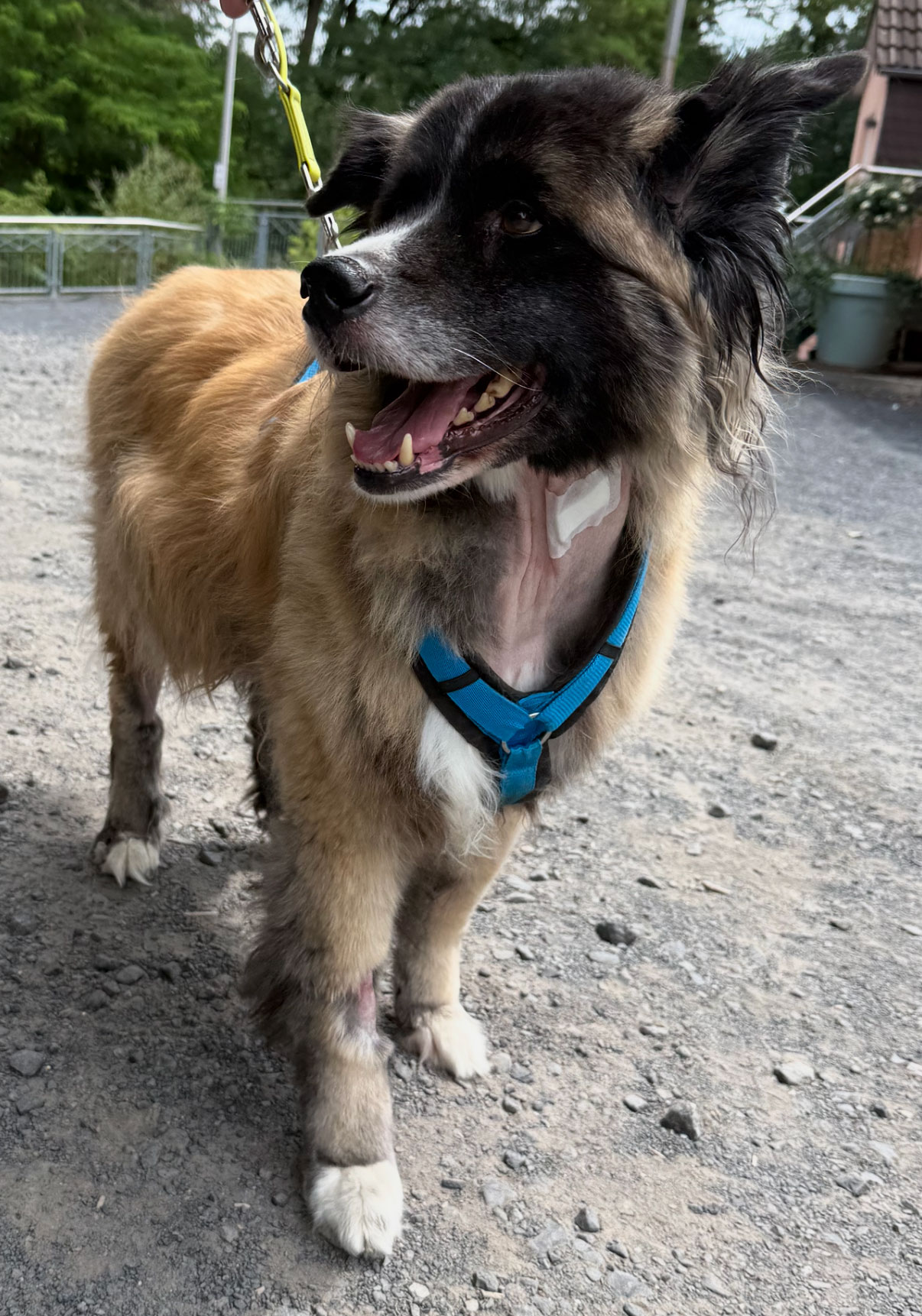
Patient immediately after stent implantation
Video: Fluoroscopic stent placemen
Real-time fluoroscopy allows precise visualisation of the relevant anatomy and accurate positioning of the stent. Once deployed, the stent supports the previously narrowed area and helps maintain blood flow.
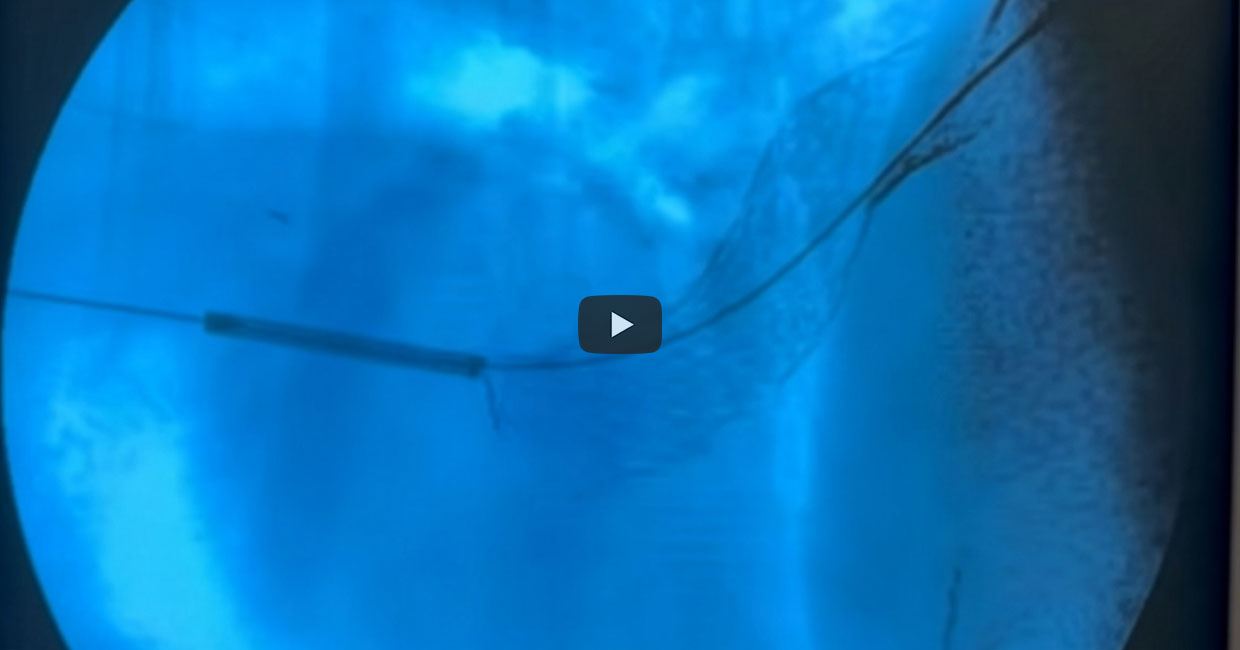 To play the videos, please click on the relevant image above. You will then be redirected straight to YouTube.
Information on referrals to the Interventional Cardiology Department
Contact

Sending Previous Medical Records

Scheduling an Appointment After Receipt of the Documents
Important Medical Notice: Acute systemic illnesses are contraindications for elective cardiac intervention, including fever, active infection, gastrointestinal disease, urinary tract infection, recent trauma. If such conditions occur prior to the scheduled procedure, the intervention must be postponed.
RA Kardiologie
Head of department of interventional cardiology
Ricardo Abrantes
Tel.: 0176 5959 1699
E-Mail: ra-kardiologie@t-online.de

In collaboration with: AniCura Alzenau
Department of Interventional Cardiology
Mömbriser Str. 100, 63755 Alzenau
Tel.: 06023 7530
E-Mail: alzenau@anicura.de